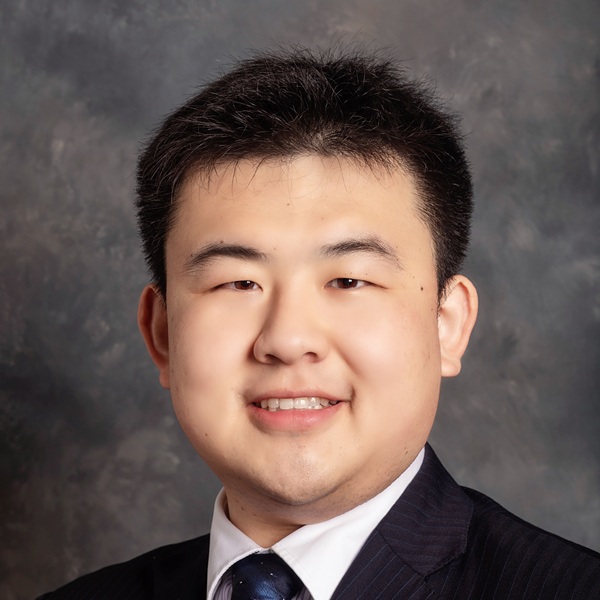
Prof. Irwin King, Fellow of ACM, Fellow of IEEE, Fellow of INNS, Fellow of AAIA, Fellow of HKIE
The Chinese University of Hong Kong, Hong Kong, China
Professor Irwin King, Pro-Vice-Chancellor (Education) and Distinguished Professor at the Department of Computer Science & Engineering, The Chinese University of Hong Kong, has a diverse research portfolio in machine learning, social computing, artificial intelligence, and data mining. His scholarly contributions include publications in prestigious journals and editorial board memberships with international publishers. He has received numerous accolades, including Test of Time Awards at ACM CIKM, ACM SIGIR, and ACM WSDM, and the Dennis Gabor Award from INNS for his pioneering work in machine learning within social computing. As a Fellow of ACM, IEEE, AAAI, INNS, and HKIE, he has demonstrated exceptional leadership in the field. He has held significant positions, including President of the International Neural Network Society (INNS) and General Co-chair for premier international conferences like WebConf, ACML, and RecSys. He is also the Director of the ELearning Innovation and Technology (ELITE) Centre, the Trustworthy Machine Intelligent Joint Lab, and the Machine Intelligence and Social Computing (MISC) Lab. His academic journey began with a Bachelor of Science degree from Caltech, followed by a Master of Science and Doctor of Philosophy in Computer Science from the University of Southern California (USC).
Title: Data-Rich, Insight Poor? Reimagining Assessment in the Age of AI
This keynote examines a growing paradox in contemporary education: universities are increasingly data-rich, yet often remain insight-poor in how they understand and improve student learning. Despite the proliferation of learning analytics, digital platforms, and AI-driven tools, assessment practices frequently remain anchored in traditional, retrospective models that prioritize measurement over meaning. The talk argues that artificial intelligence offers not simply a means to optimize existing assessment systems, but an opportunity to fundamentally reimagine them. By shifting from static evaluation to dynamic, process-oriented insight, AI enables educators to better understand how learning unfolds over time—identifying patterns of engagement, points of difficulty, and trajectories of development. However, realizing this potential requires more than technological adoption; it demands new forms of data literacy, redefined academic roles, and robust institutional frameworks for ethics, transparency, and trust. The keynote will explore how universities can move beyond data accumulation toward insight-driven assessment strategies that are adaptive, learner-centered, and aligned with the evolving goals of higher education.
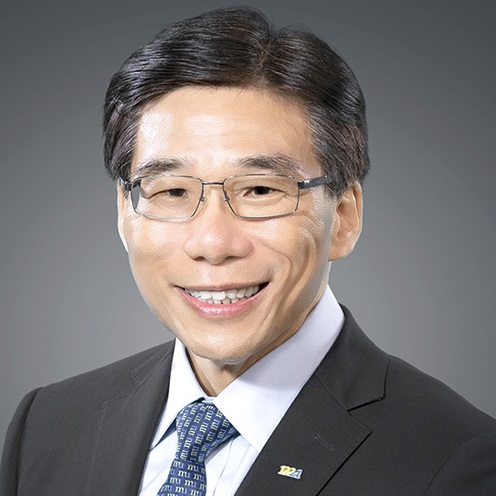
Prof. Kam Cheong Li
Founding Dean (School of Open Learning) & Former Director (Institute for Research in Open and Innovative Education)
Senior Adviser, Distinguished Professor & Dean (School of International Studies), Guangdong Open University
Visiting Professor, Doctor of Professional Studies Programmes, Middlesex University
Hong Kong Metropolitan University, Hong Kong
Recognised among the world’s top 2% of scientists by Stanford University and Elsevier, Prof Kam Cheong Li is an internationally renowned scholar and leader in the field of open and distance education. In 2023, he received two highly prestigious accolades: the International Council for Open and Distance Education’s “Prize of Excellence” and the Asian Association of Open Universities’ “Meritorious Service Award”. Each of these awards is conferred upon only one distinguished individual per year. Since 2012, Prof Li has served as a Visiting Professor at Middlesex University in the United Kingdom, where he has also acted as the university’s advisor and consultant for the Doctorate of Professional Studies programme for many years. Before his retirement from Hong Kong Metropolitan University, he served as the Founding Dean of the School of Open Learning and Director of the Institute for Research in Open and Innovative Education. He now assists various institutions with their research development, and actively conducts research in educational technology, innovative learning and teaching, and open education.
Title: Reimagining University Teaching: The Professorial Role Shift in an AI-Intensive Higher Education Landscape
Higher education is undergoing a profound pedagogical reorientation, driven by the rapid proliferation of generative artificial intelligence (AI) and evolving labour market demands in the contemporary knowledge economy. This paper examines the transforming role of the university professor, arguing that the conventional model of the professor as a transmitter of disciplinary knowledge is increasingly inadequate across many contexts, compared to roles more accurately framed as learning architect, learning coach, and pedagogical inquirer. Addressing a critical gap in current scholarship, the paper transcends narrow discussions of isolated teaching techniques to analyse the broader reconfiguration of academic teaching identity. Drawing on recent empirical and conceptual literature, this paper maps this paradigm shift across four interconnected dimensions: (1) the transition from knowledge transmission to learning design and personalised coaching; (2) facilitating students’ evolution from passive knowledge recipients to active co-constructors of knowledge; (3) the development of individualised learning pathways enabled by digital technologies; and (4) a deeper institutional and individual commitment to the Scholarship of Teaching and Learning (SoTL). The paper also examines systemic barriers to this transformation, including excessive workloads, misaligned reward structures, student resistance to pedagogical change, and ethical concerns surrounding data privacy and algorithmic transparency. This paper argues that the evolving role of the professor is not merely a matter of adopting new digital tools, but requires a fundamental rethinking of pedagogical purpose, academic labour practices, and institutional support systems in an AI-intensive higher education environment.
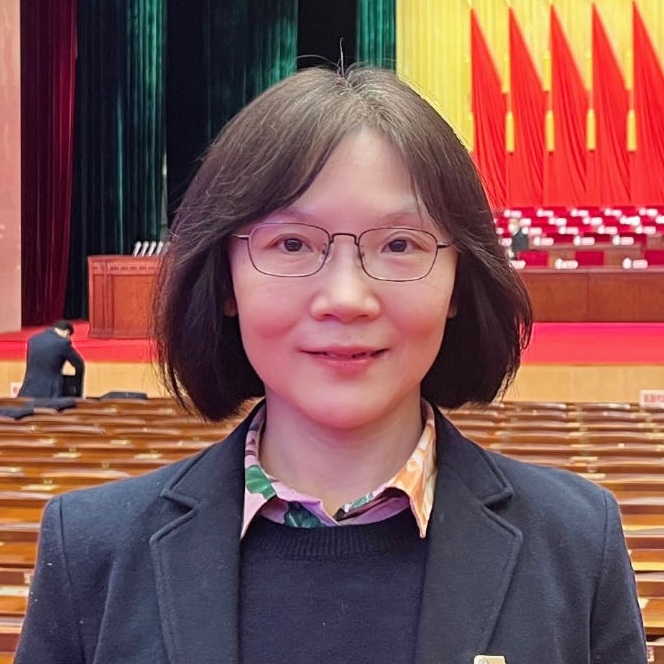
Prof. Yi Zhang
Central China Normal University, China
Zhang Yi graduated from the Department of Educational Information Technology of East China Normal University in 2003, graduated from the Department of Mathematics of Central China Normal University in 1989 with a bachelor's degree in computer science, and in 2014, he went to the University of North Texas to study technology for a year. He is currently a professor and doctoral supervisor of the School of Educational Information Technology of Central China Normal University, the head of the Department of Educational Technology, an adjunct professor of the National Digital Learning Engineering Technology Research Center, the deputy director of the China Education Informatization Research Center of Central China Normal University, a part-time graduate tutor of Wuhan University, and a visiting professor of Huanggang Normal University. She is currently a deputy to the 14th People's Congress of Hongshan District, Wuhan City, the chairman of the Central China Normal University Committee of the Chinese Peasants' and Workers' Democratic Party, and a member of the trade union of Central China Normal University.
He is also an expert member of the International Organization for Standardization Digital Learning, Education and Training Technical Standard (ISO/IEC JTC1 SC36), a member of the Education Technology Committee of the National Information Technology Standardization Technical Committee, a member of the expert database of the "National Primary and Secondary School Teachers' Information Technology Application Ability Improvement Project", an editorial board member of the academic journal "Basic Education Reference", an external review expert of the journal "Electronic Education Research", and an expert of "Educational Technology Research and" Development", vice chairman of the Program Committee of the 4th Digital Gamified Learning Conference, and vice chairman of the Primary and Secondary School Teachers Forum of the GCCCE2014 Global Chinese Computer Education Application Conference.
Title: GenAI-Supported Agents in Education: Application Issues and Research Design
The rapid advancement of Generative Artificial Intelligence (GenAI) is driving the continuous evolution of educational agents, transforming them from passively responding auxiliary tools into proactively intervening, autonomous pedagogical partners. This keynote address will comprehensively explore the deep integration pathways of GenAI agents within the educational sector, systematically elaborating on two core modules: prominent application issues and innovative research designs. The first part of the presentation provides a macro-level perspective to systematically review the prominent application issues of GenAI agents in education across three main dimensions. First, Technical Principles, focusing on the developmental trajectory of educational agents, as well as their core technological scaffolding and pedagogical adaptability within the GenAI context. Second, Educational Value, distilling the primary application directions and practical teaching efficacy of these agents, and deeply analyzing their core advantages and instructional affordances in optimizing the teaching and learning process. Third, Risks, Challenges, and Governance, critically examining potential issues during the scaled application of agents—such as AI hallucinations, data privacy breaches, and the decline of learner agency caused by over-reliance—and exploring the construction of safe, controllable, and compliant educational governance strategies. The second part highlights our team's latest research outcomes, systematically demonstrating the complete trajectory of GenAI educational agents from design and development to classroom implementation, along with their empirical conclusions. Based on the distinct pedagogical needs of different teaching scenarios, the presentation shares corresponding representative research works: For Higher Education, we developed a Socratic conversational agent designed to deeply cultivate students' reflective thinking. For Basic Education, we designed an agent that provides metacognitive adaptive scaffolding to facilitate the development of students' computational thinking. Grounded in STEAM Education, we developed an agent based on parasocial interaction theory, which effectively enhances students' collaborative learning performance. Finally, this presentation will share our team's ongoing research and prospectively outline the future trends of GenAI-empowered education. It aims to provide an inspiring roadmap for the design, development, and application of next-generation educational agents, ultimately facilitating the digital transformation of education and innovative development in the field of Artificial Intelligence in Education (AIED).

Prof. Feng-Kuang Chiang
Director of the Future Education Research Center
Shanghai Jiao Tong University, China
Prof. Feng-Kuang Chiang is the Associate Dean of the School of Education, Tenured Professor, and Director of the Future Education Research Center at Shanghai Jiao Tong University. Concurrently serves as Vice Dean of the Shanghai Research Institute of STEM Education for Youth. His research focuses primarily on STEM education, artificial intelligence in education, engineering education, and learning space design. He currently serves as Chair of the International Executive Committee of the International Society for STEM Education (ISSE). He was previously a visiting scientist at Massachusetts Institute of Technology (MIT) and serves on the editorial boards of six international academic journals. He received the Sixth National Excellent Master of Education Teacher Award and has been recognized as an Elsevier China Highly Cited Researcher in Education for six consecutive years. He has led numerous research projects funded by the National Natural Science Foundation of China, the National Education Sciences Planning Program, and the Humanities and Social Sciences Research Program of the Ministry of Education, among others.